In our series on vehicle noises, let’s look at a common culprit: the CV joint/axle.
Crackle, Snap, Pop
This isn’t a breakfast cereal, it’s the order of events if you ignore a new noise coming from your vehicle. Usually, it starts as a faint crackling or clicking when turning.
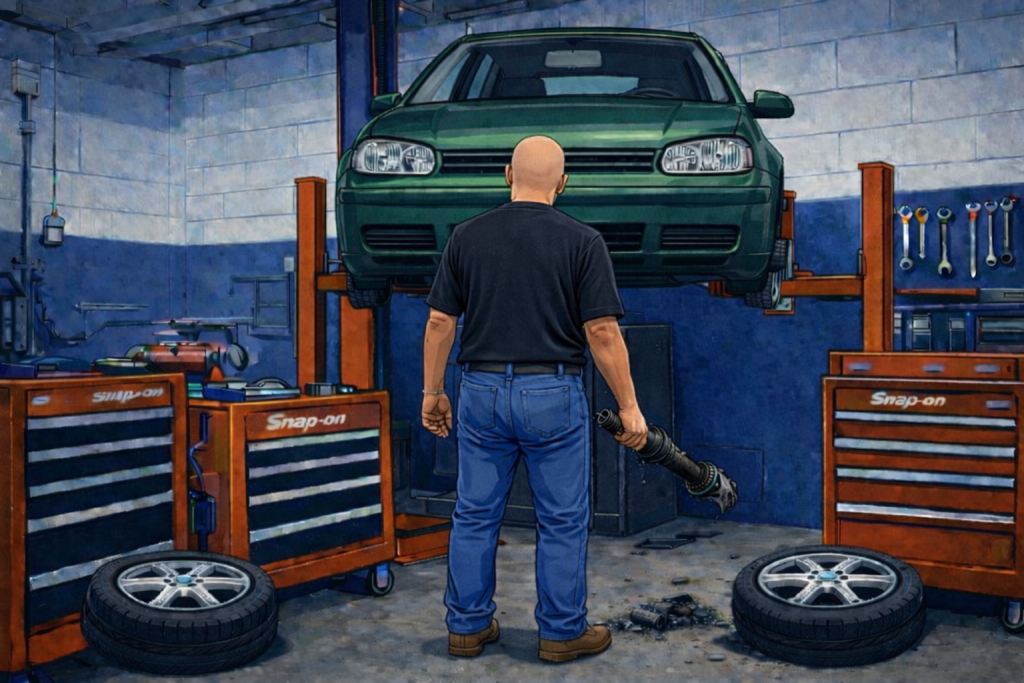
At first, it only happens on tight turns, eventually, it happens every time you turn the steering wheel. That is the sound of a worn CV joint on a front-wheel-drive or some four-wheel-drive vehicles.
There are usually two joints per driveshaft, but the majority of the time, that clicking comes from the outer joint as its damaged internals struggle to transmit power while pivoting and turning.
What is this joint?
A CV (constant velocity) joint consists of a formed metal cup with an inner race held in place by a set of ball bearings. This design allows the joint to bend while it is still rotating, transmitting drive to the wheels while simultaneously allowing you to steer.
To survive, the joint relies on a special molybdenum disulfide (“moly”) fortified, lithium-based grease designed specifically for heavy metal-on-metal contact. This grease is sealed inside a protective, bellows-style boot made from neoprene rubber or thermoplastic elastomers (TPE/TPEE).
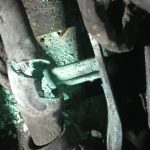
While modern TPEE boots are much tougher than old rubber ones, they can still fail. A torn boot allows the grease to escape — making an absolute mess of your wheel and suspension — while allowing dirt, water, and road grit to enter. This creates a “grinding paste” that destroys the joint from the inside out.
Click, Click, Click
The click is the most recognizable symptom of a failing outer CV joint. It is most prominent during tight maneuvers, like pulling out of a junction or parking. At these sharp angles, the ball bearings are forced to the very edges of their worn tracks. That rhythmic clicking is the sound of deformed bearings hammering against a pitted metal race.
You can diagnose this yourself by finding a large, open area and driving in a tight circle on full steering lock in both directions. The side that produces the loudest noise is your culprit.
What happens if it’s ignored?
We started with the “Crackle, Snap, Pop” analogy. We’ve dealt with the crackle, which leaves only two stages left.
If left to its own devices, the joint will eventually snap while you are driving — which is an interesting and dangerous experience — or simply pop apart, causing you to lose drive to that wheel.
Because most vehicles use open differentials, losing drive to one wheel means the car won’t move at all. You’ll be left stranded. So keep a listen out to prevent higher repair costs and tow truck charges.



Leave a Reply